Competition /ˌkɒmpɪˈtɪʃn/ 1. The activity or condition of striving to gain or win something by defeating or establishing superiority over others.
2. The person or people over whom one is attempting to establish one’s supremacy or superiority, the opposition.
Whether we like it or not, life is competition, which sucks because I’m just a chill guy. Ecology defines competition as the interaction between organisms or species that require the same limited resources, such as food, water, shelter, or mates.
In modern times we have alleviated some of this competition to the point where it can be avoided almost entirely. Jobs are plentiful, sort of. Minimum wage ensures everyone gets a fair go, sort of, and you no longer have to worry about dying if you drive to woolies to get a bachelors handbag for dinner, sort of.
Unfortunately, if you choose to spend your time – and hundreds of dollars – buying, building, painting a vast collection of miniatures, learning an everchanging ruleset, organising a game, travelling to a game store or tournament, setting up the game, going over your rules with your opponent, and then playing the game which has a large component of chance, then competition is unavoidable.
I love chess.
At its core, chess is face up, open information and fair competition. Everything you need to know is on the board in front of you. Of course, prior to the game the only consideration you really need to make is if you are going first, or second.
So, what expectations do we have of both ourselves and our opponent when we sit down for a game of chess.
- Following the rules (Not cheating)
- Trying our best to win (Avoiding losing)
- Making the best decisions with the information available to us
- Good sportsmanship
Anyone interested in good, decent, and fair competition would agree with these expectations, and, well, expect them. But is it against the spirit of fair competition if we break them?
In chess, the player with the white pieces has the first move. As white, there exists a number of opening moves that aim to create an advantage, while black has a number of replies aimed at minimising this advantage, or creating an advantage themselves. But what if as the white player I was to ignore this, and begin the game with a step backwards, immediately being behind.
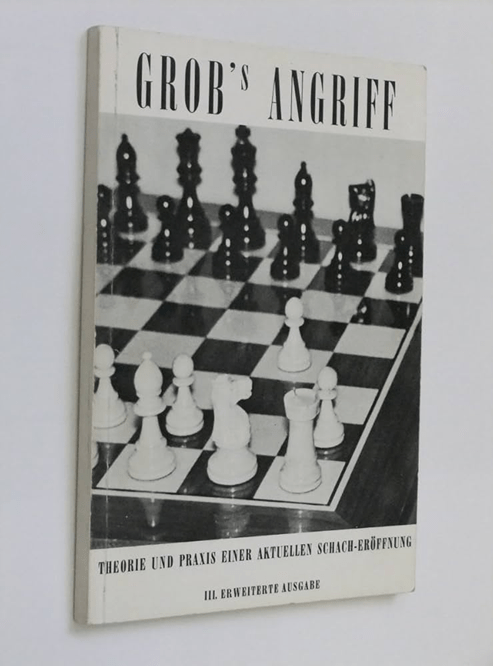
How bad is ignoring the core principles of chess really? In the book ‘Mastering the Chess Openings Volume 4’, International Master John Watson writes, “As far as I can tell, 1 g4 is competitive with 1 h4 for the honour of being White’s worst first move. Against an informed or skilled opponent, it is simply masochistic”.
1. G4 or the Grob’s attack is an opening that immediately puts you behind and with perfect play from black you cannot win with this strategy. However, it has a surprise value, and the average player is unlikely to know how to refute it. They probably haven’t spent their time studying theory for a move that a player wouldn’t typically make.
I love this opening. It’s almost the only opening I play with white, and it isn’t actually that bad. Having played around 1400 blitz games with the opening (stats below), I have around a 56.2% win rate for white and am sitting at 2007 rating on chess.com putting me in the top 99.4% of players.
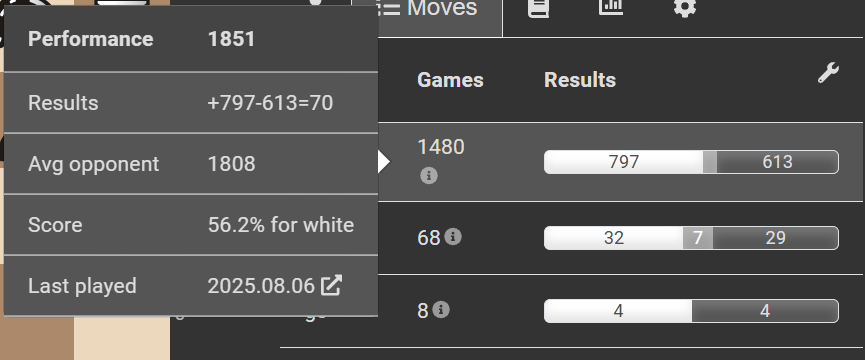
It clearly can’t be that bad right?
This can be incredibly frustrating to play against. You know your opponent is doing something that isn’t optimal, and they’re doing it on purpose knowing that it isn’t the best move they can be making, and then you lose to it.
Well, let’s check back in with our expectations. I am clearly following the rules of chess, I moved all my pieces legally and did not cheat. With the exception of playing a single poor opening move, I am trying my best to win and by extension I am making the best decisions with the information available to me.
Am I displaying good sportsmanship?
I have previously attended my local chess club, and would like to again in the future, but I am lazy. While attending the club we played competition games each week after an hour or so of casual games. We played various time formats, think blitz (3-5 minutes), rapid (10-30 minutes), and classical (90 minutes). Depending on my opponent, Swiss record, and time control I would play the Grob (or the Borg if I was black).
Online, no one can hear me scream, but over the chessboard this is a different story. If I was playing someone who I believed was better than me or at my skill level I wouldn’t play the Grob, unless it was a faster time control. It felt disingenuous to our match up, especially when there was a person over the board from me who had given up their time to come and play competition chess and was expecting a serious game. But is it rude to play a worse opening against someone who I believe is below my skill level?
Warhammer is not a serious game
Ultimately, competition boils down to a rivalry where two or more parties are striving for a common goal that cannot be shared. How you achieve this goal, is up to you.
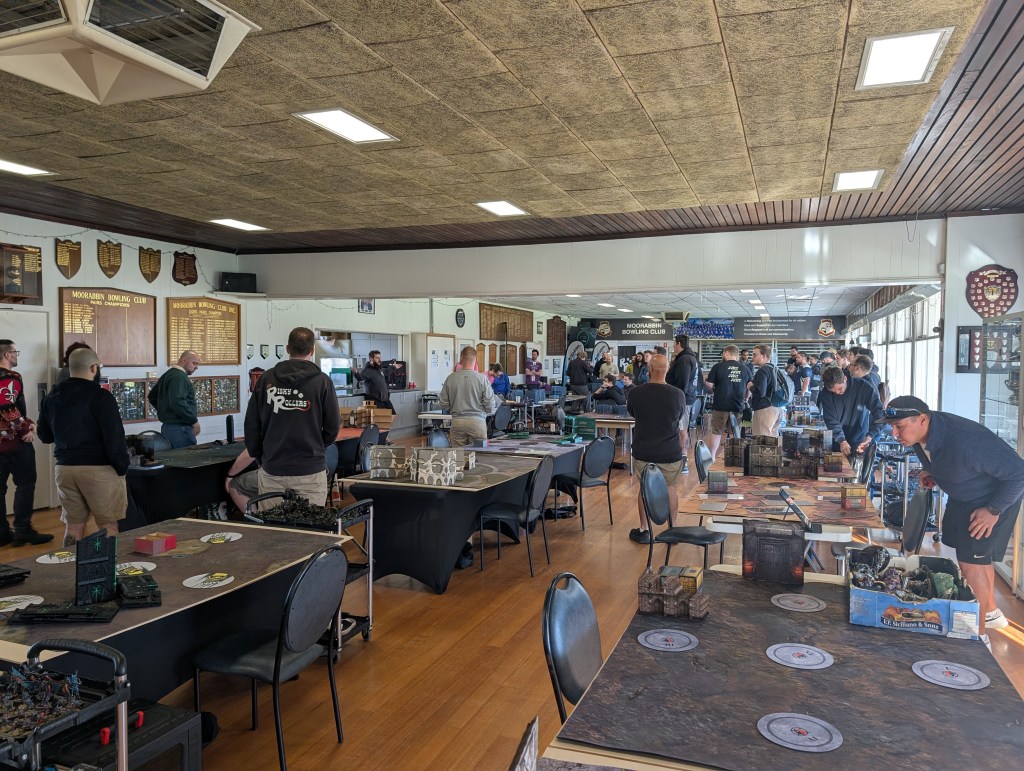
At its core, Warhammer is not a serious competitive game. It never has been and never will be. In my opinion Warhammer tournaments exist to celebrate the incredible hobby – as your models must be painted and based to attend most events – and game with like-minded people. It is a silly thing to push little figurines around a board and make believe you are fighting a battle in the 41st millennium.
As a result of this you often find people using suboptimal strategies during games. Although, this has slight differences to chess. Whereas in chess both players have essentially the same ‘list’, Warhammer allows you an immense amount of flexibility with what you bring to the table. But once you’re at the table, you then have to play the game with what you’ve brought, and sometimes, what you’ve brought is dogshit.
Speaking from my own experience, bringing lists, detachments or armies that aren’t competitive or ‘meta’ makes the game more interesting. How boring it would be if you were to attend a local event and everyone was playing the same 3-4 armies with very similar lists. There is some merit to playing a similar list and detachment for a long period though. You become very familiar with the rules of your army and can begin to spend your time focusing on other facets of the game.
Irrespective of what kind of list you bring, when playing Warhammer I always like to try and give my opponent the kind of game I would like to experience. Ensuring they are aware of my rules and the board state I am intending to create, while representing that intent physically with my models on the board, and if I cannot easily create this, I don’t.
As far as what to expect when you are expecting, I don’t know. Just be kind to each other.

 Litanies of the Faithful
Leave a comment