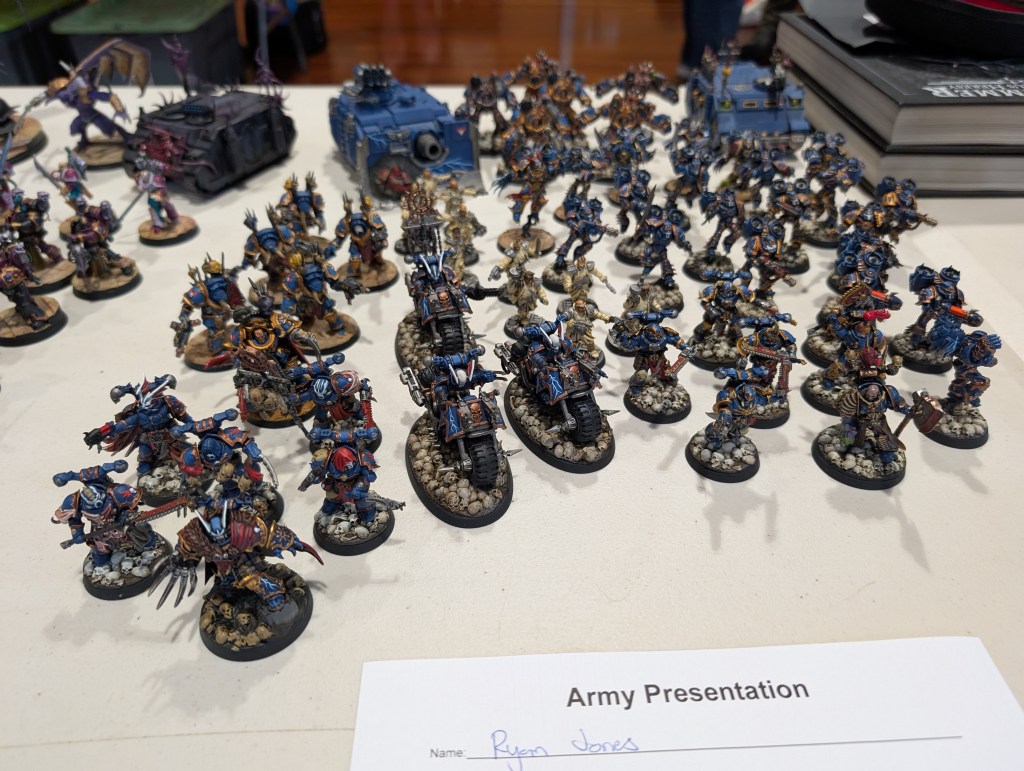
But really, what is a “Dread Talon”?
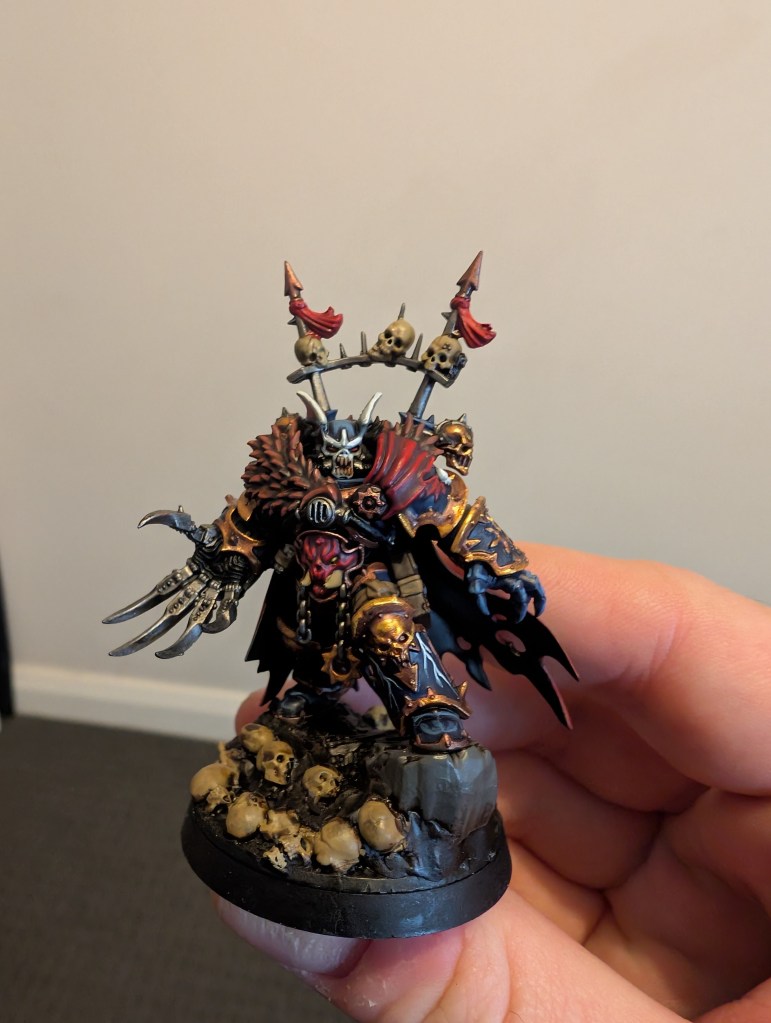
With the advent of 10th edition detachments are no longer encapsulated by their counterparts in the lore. Where in 9th edition you would find a Space Marine detachment (previously chapter tactics – each faction had their own name for detachments) aptly named Ultramarines: Codex Discipline, in 10th edition, there is no equivalent, well, allegedly.
10th edition introduced faction agnostic detachments, allowing you to play your guys with any rules you like, without feeling as if you had to play the Ultramarines detachment if you decided to paint your guys blue.
However
If you open the Warhammer 40k app and scroll down to Space Marines, opening the Gladius Task Force detachment, you will see an image of Ultramarines. While if you open the Stormlance Task Force detachment, you will see an image of white scars. So, did anything change really?
This has led to many a conversation that goes, “So what detachment are you playing?”, “Oh, I’m playing Deceptors”, “Which ones that?”, “Sigh, the Alpha Legion detachment”, “Oh yeah! I’ve played against that one before”.
But Ryan, does it really matter if the detachment is ‘associated’ with the lore, can’t you just play whatever rules you think are fun and enjoy a board game, I mean, narratively you can apply almost any rules to the game you are playing and your models.
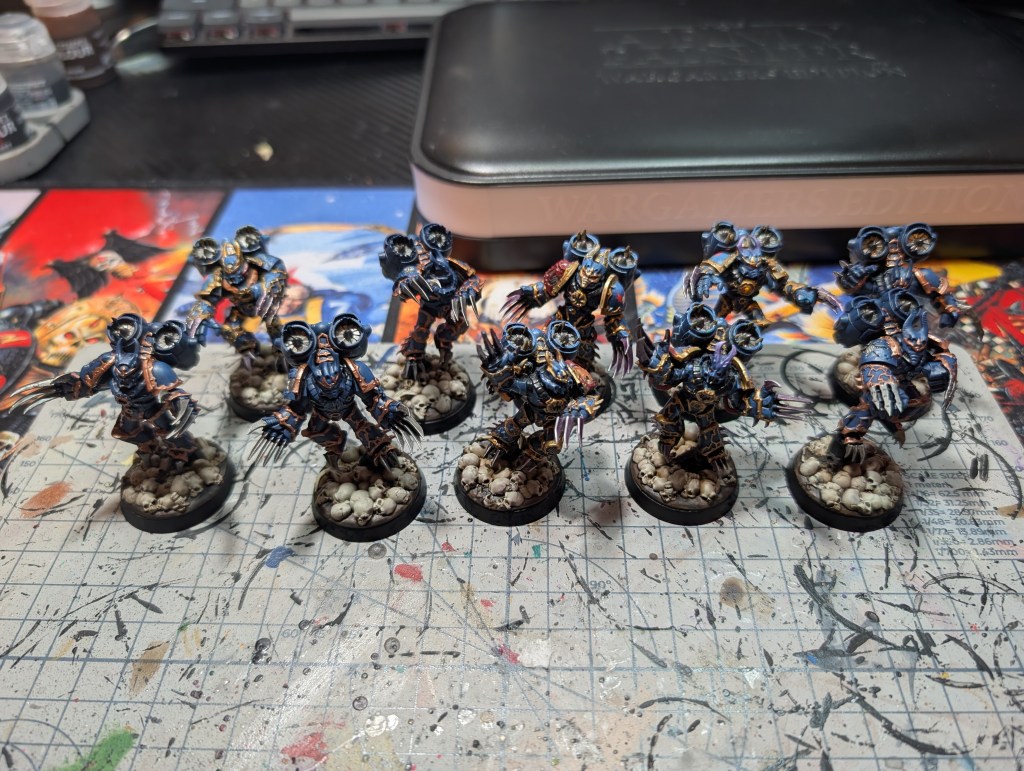
No, I am a Night Lord, I am playing Dread Talons, and I am going to complain to my friends about it.
Dread talons is the unofficial official Night Lords detachment for 10th edition. It has some similarities to the previous edition counterparts. In the previous 3 editions the Night Lords special rule has been called Terror Tactics, now, Terror Descends, sure. There are a few things missing, most annoying we are missing a relic weapon enhancement for lighting claws, but as the Chaos Lord with Jump Pack was squatted at the start of 10th then later reintroduced, this kind of checks out, huge flavour fail though.
I think the detachment has lost a bit flavour wise compared to previous editions, but as the game moves towards faction agnostic detachments this makes sense. The enhancements and stratagems still evoke the flavour of the Night Lords, just not as aggressively. Although, while the rules may have been more flavourful in previous editions, they were just as useless as they are in the current edition. Speaking of the rules, let’s have a look at the bad, and the terrible.
Dread Talons:
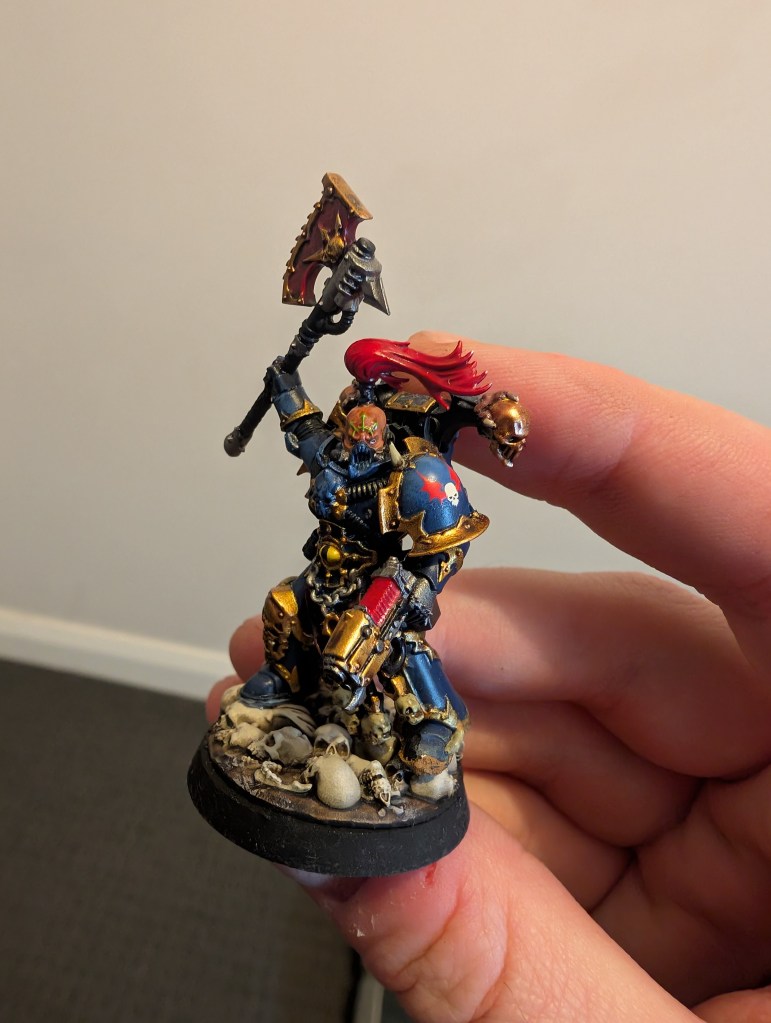
Detachment Rules: Terror Descends (Aura)
- In the Battle-shock step of your opponent’s command phase, if any enemy unit that is below its starting strength is within 12″ of one or more Heretic Astartes units from your army, that enemy unit must take a Battle-shock test.
- Each time an enemy unit within 12″ of one or more Heretic Astartes units from your army takes a Battle-shock test, subtract 1 from the result.
- Enemy units affected by this Detachment rule do not need to take any other Battle-shock tests in the same phase.
This isn’t great, but it’s there. There aren’t any hoops you need to jump through as the player to get your detachment rule, it doesn’t really force you to run certain units, it’s just there. Your opponent will be taking more Battle-shock tests, and they will be arguing with you and complaining about it every time. It is, very annoying, and somewhat relevant, which is more than can be said for the 9th edition detachment rule. However, what this rule gains over its 9th edition counterpart, it loses to enhancements and stratagems.
Enhancements:
- Night’s Shroud (20 points): Chaos Lord model only (excluding Terminator models). Models in the bearer’s unit have the stealth ability.
- Willbreaker (10 points): Heretic Astartes model only. In the Fight phase, after the bearer has made its attacks, select one enemy unit hit by one or more of those attacks. That unit must take a Battle-shock test.
- Warp-Fuelled Thrusters (20 points): Jump Pack Chaos Lord model only. At the end of your opponent’s turn, if the bearer’s unit is not within Engagement Range of one or more enemy units, you can remove the bearer’s unit from the battlefield and place it into Strategic Reserves.
- Eater of Dread (15 points): Heretic Astartes model only. At the start of your command phase, if the bearer is on the battlefield, roll one D6, adding 1 to the result for each Battle-shocked enemy unit that is on the battlefield: on a 5+, you gain 1CP
Stratagems (these all cost 1 CP):
- Depthess Cruelty: Fight Phase – One Heretic Astartes Infantry unit that has not been selected to fight – until end of phase, each time a model in your unit makes an attack that targets a unit that is Battle-shocked and/or Below Half-strength, improve the AP of that attack by 1.
- Bloody Example: Fight phase just after a Heretic Astartes unit from your army destroys a Character unit – that Heretic Astartes unit – each enemy unit within 12″ of and visible to your unit must take a Battle-shock test.
- Pitiless Hunters: Your shooting phase – one Heretic Astartes Infantry unit from your army that has not shot – until end of phase, each time a model in your unit makes an attack that targets a unit that is Battle-shocked and/or below Half-strength, you can re-roll the hit and wound roll.
- Relentless Terror: Your movement phase, just after a Heretic Astartes Infantry unit from your army falls back – that Heretic Astartes Infantry unit – until the end of your turn, your unit is eligible to declare a charge in a turn in which it fell back.
- Screaming descent: Reinforcements step of your movement phase, from the second battle round onwards – One Heretic Astartes Jump Pack unit from your army that is in Reserves – 6″ deepstrike, you cannot charge and pick an enemy Infantry or Mounted unit within 9″ and visible, that unit must take a battle-shock test.
- Merciless Pursuit: End of your opponent’s movement phase – one Heretic Astartes Infantry unit that is not within engagement range of one or more enemy units – select one enemy unit that fell back this turn and is within 6″ of your unit. Your unit can declare a charge as if it were your charge phase, you can only select that enemy unit as the target of the charge, and you do not receive charge bonus.
In a vacuum, these rules are actually ok for playing 40k, they are certainly better than the Ad Mech rules I played with for a year, but only barely. A few of the stratagems only activate later in the game when units start becoming battle-shocked, but fall back and charge is always useful, as well as charging as unit that has fallen back. However, compared to the rest of the Chaos Space Marine detachments, this, is dog shit.
Starting with the enhancements, Night’s Shroud would be excellent on a unit of Terminators, but you can’t put the enhancement on a Termi-lord, and for 20 points it’s probably not worth using on a 5-man unit. This enhancement is best utilised while leading a unit of 10 Chosen or Legionaries. However, Fabius bile gives Chosen +1 strength and toughness as well as blanking damage once per turn, which is better? You could throw it on a Jump Pack lord with 10 Raptors, but after running a JPL for a while I just don’t think the model is worth using. On a unit of 10 Chosen or Legionaries though, excellent.
Willbreaker would be great if you were required to take the test prior to fighting, afterwards doesn’t make much sense as the unit will unbattle-shock at the beginning of your opponent’s turn anyway. This could be useful after you are charged, forcing them to take a test in their turn if you survive the charge? Most useful on a Terminator Lord or Daemon Prince perhaps, good for filling a 10-point gap in your list.
Warp-Fuelled Thrusters is a bit of a trap, but I’ll talk more about this after I discuss the stratagems.
Eater of Dread is uhhhh something, this probably wouldn’t see much play even if it was 5 points. You aren’t ever really spamming the same stratagems every turn in this detachment, and with Chaos Lords you can grenades/re-roll for free a lot of the time. Getting on average 1.67 extra CP per game baseline, while hoping your opponent’s get Battle-shocked and you don’t lose the model with this enhancement too early is a bit much. If you have the extra 15 points, go for it, but I wouldn’t plan around this enhancement.
The only enhancement I would consistently take from this list, barring left over points is Night’s shroud, and even then, only if I was taking a unit of 10 Chosen or Legionaries led by a Chaos Lord. Bit grim out here innit, let’s talk stratagems.
The stratagem suite available to Dread Talons – in a vacuum – is ok. Depthless Cruelty for an extra AP in melee is excellent, only against battle-shocked units and/or units below half strength is not excellent, this is where Willbreaker happening before fighting would make more sense. Similarly, Pitiless Hunters giving full re-rolls to hit and wound in shooting – for an infantry unit – is very good, but, the enemy unit must be battle-shocked and/or below half strength, making it circumstantial. There are very few abilities that force battle-shock tests for enemy units in your turn prior to shooting or fighting, meaning it’s likely you’ll have to wait for enemy units to become battle-shocked naturally, or through your detachment rule to start using these offensive stratagems. You want to know what’s better than battle-shocking a unit to get buffs against it? Just killing the unit outright to begin with. Although this does help the detachment with killing vehicle heavy armies like Knights, which it struggles with.
Bloody example, while being incredibly circumstantial may come up in 1/10 games and be relevant. Meanwhile Relentless Terror is a stratagem you could use almost every game, fall back and charge is excellent and incentivises running Possessed and Accursed Cultists. Additionally, Relentless Terror synergises well with Merciless Pursuit, allowing you to charge an enemy unit that has fallen back within 6″, once again encouraging Possessed and Accursed Cultists – these stratagems only work on Heretic Astartes Infantry units. While your opponents may have ways of avoiding the charge, i.e. by falling back further than 6″ or by blocking your movement, this will allow you to more easily defend objectives and keep your melee units safe. However, as this stratagem is relatively uncommon, it would be good practice to remind your opponent of this rule, especially as it is used at the end of your opponent’s movement phase.
Lastly, screaming descent, what was once a 3″ deepstrike with a jump pack unit is now 6″, a lot less useful, especially considering it forces a battle-shock test for an enemy infantry or mounted unit within 9″ and visible, but the Raptor ability wasn’t updated when 3″ deepstrike was nerfed. Although, it is quite humorous that the worst CSM detachment by WR suffered a shadow nerf as a result of this change. This stratagem while being useful on paper is sort of a trap, which is what we will be talking about next.
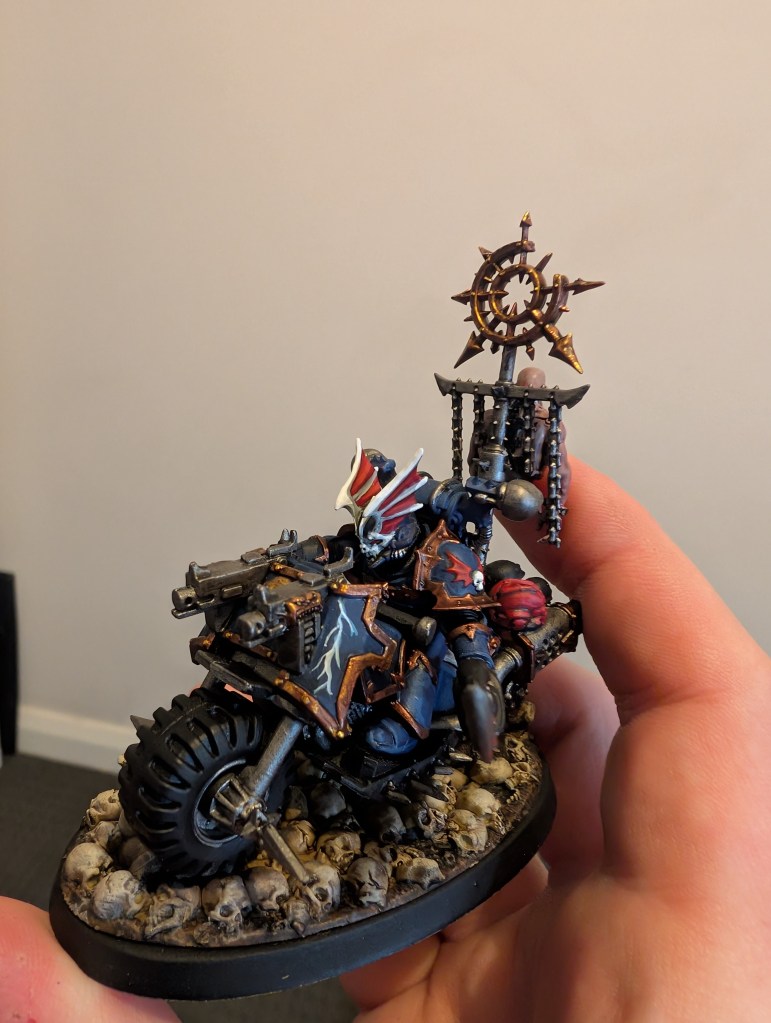
Avoiding the bad, steering into the skid
I was once listening to a podcast where some nerd was discussing their experience theory crafting with the Shadow Legion detachment. They did the math, double checked the calculations and came to the conclusion that 15 Havocs with Lascannons was an excellent addition to the list, reliably picking up light transports and with their combined firepower dealing with heavier threats, all while benefitting from Be’lakor’s 18″ no shoot aura.
However, after testing in game they soon realized that Havocs are, shit, and as a Havoc enjoyer, I can attest to this. The lesson here being to ignore the bait, the traps, the enhancements or stratagems that are a bit too cute, even though theoretically it’s a good idea. Turn your focus to what is solid, what works well, and steer into it.
Take Warp-Fuelled Thrusters for example, having the ability to go back into reserves at the end of your opponent’s turn is incredibly powerful when combined with a 6″ deepstrike, for certain armies. Take Hernkyn Pioneers for example, although they can only be placed into strategic reserves instead of Deepstrike, and they can’t do a 6″ deepstrike, they are still far more effective than a unit of Raptors, with a leader, with an enhancement. Pioneers cost 80 points, while a leader with a unit of Raptors is 190. You may as well just run two units of Raptors and have 10 points change left over for Willbreaker. While this enhancement may be relevant in some metas, the Chaos Lord with Jump Pack datasheet isn’t worth its points, and without it, you must omit the enhancement. This is one of the many pitfalls of the detachment. While the Stratagem can be useful, such as your opponent toeing onto an objective on T2/3 and being able to 6″ a 90-point unit to take it back + screen in the same drop, the battle-shock ability may as well be ignored for strategic purposes. Narratively, throwing this on a 10-man raptor unit with 4 plasma guns and a JPL is a great time though, and highly encouraged, if you want to spend 280 points on a unit that does nothing.
As far as the other enhancements go, Night’s Shroud is excellent on a Lord leading 10 Chosen or Legionaries, but I’d give the others a miss unless you have the points left over.
How bad is battle-shock really?
The command phase is split into two steps, first both players gain 1 command point and you resolve any other command phase rules; in the second, the player whose turn it is tests to see if any of their units are battle-shocked.
In the battle-shock step, you must take a battle-shock test for each of your units on the battlefield that is below half-strength. Rolling 2D6: if the result is greater than or equal to the best leadership characteristic in that unit, the test is passed; otherwise, the test is failed, and until the start of your next command phase, that unit is battle-shocked.
While a unit is battle-shocked:
- The objective control characteristic of all of its models is 0.
- If it falls back, you must take a desperate escape test for every model in that unit.
- Its controlling player cannot use stratagems to affect that unit.
These debuffs are incredibly annoying and make certain units useless for scoring secondaries and/or primary points. Additionally, forcing a test in the fight phase can turn off offensive and defensive stratagems, as well as combat interrupt.
Most armies have standardised leadership values, with exceptions that certain characters may have better leadership, and chaff/weaker units may be worse. Generally, leadership will be between 5-7.
Take Space Marines for example, they are leadership 6+ across the board, with special characters like Chaplain Grimaldus having 5+ leadership, but the Cenobyte servitor also attached to his unit has leadership 8+.
6+ LD:
- Space Marines
- Chaos + Imperial Knights
- CSM + all flavours of chaos marine
- Chaos Daemons
- Grey Knights
- Custodes – lmao the Emperor’s finest
7+ LD:
- Adepta Sororitas
- Adeptus Mechanicus
- Astra Militarum (Can order to 6+)
- GSC
- Leagues of Votann
- Orks
- Tyranids – doesn’t count because of Synapse
- T’au – they have like 2 6+ LD characters
Good mix of 6/7:
- Eldar – Some infantry is 6, some is 7, vehicles are 7, except for Ynnari which is 6?
- Dark Eldar – Checks out when Eldar is the same
- Imperial agents – mostly due to characters + allies
- Necrons – again due to characters
Generally, leadership, at its best is a 5+, while at its worst is an 8+, and on average your opponent will be sitting somewhere between 6 and 7. There are caveats to this, like Tyranids getting to roll 3d6 on leadership if they are within Synapse, and some armies ignoring modifiers which mean they keep their OC, which is the biggest downside to becoming battle-shocked. Additionally, once per game it can just be ignored with Insane Bravery.
Of course, with Dread Talons your opponent is going to have to be making these tests when below full-strength instead of half-strength, which is really annoying for them.
What are the odds they fail?
Note: After all modifiers are applied, Leadership characteristics can never be 4+ (or better), or 9+ (or worse).
| Leadership | Chance of succeeding | Chance of failure |
| 5+ | 83% | 17% |
| 6+ | 72% | 28% |
| 7+ | 58% | 42% |
| 8+ | 42% | 68% |
| 9+ | 27% | 73% |
There are no re-rolls when it comes to battle-shock, so these numbers are fairly reliable, there is of course some variance around dice rolls in general, but this table should be a fairly straight forward depiction of why Dread Talons sucks ass.
Most of the time, if the enemy units are within 12″ of your units (this happens a LOT), AND are below full-strength, they still have a better chance of succeeding battle-shock than failing. Of course, the caveat to this is that anytime your opponent has to roll dice with a chance of a negative effect occurring, it’s a good thing for you. The more dice you make your opponent roll, the better, most of the time.
What can we do about this?
The options CSM have for increasing the opponent’s chance of failing battle-shock are very limited.
We can ally in Noise Marines and shoot the enemy, choosing one enemy unit that was hit after shooting and subtracting 1 from leadership and battle-shock tests until the start of your next shooting phase.
A Daemon Prince with wings can force an enemy unit to take a battle-shock test that it moved over, in the movement phase.
Raptors have a 6″ aura of subtracting 1 from battle-shock and leadership tests, also they force them for each enemy unit within engagement range at the start of the fight phase.
The Cultist Firebrand can force an enemy infantry unit to take a battle-shock test in the shooting phase – after it has shot at said unit.
Hararken Worldclaimer just has the same ability as the Dread Talons detachment, lol.
The Khorne Lord of Skulls forces all enemy units within 6″ of the model to take a battle-shock test, in the fight phase, AFTER it destroys one or more enemy units.
Daemonettes can force battle-shock for each enemy unit within engagement range of the unit, subtracting 1 if the enemy unit is below half-strength.
Plague Marines have a 6″ aura of negative 1 leadership.
Skull Cannons force battle-shock for a unit they hit in the shooting phase, but you also have to ally in a unit if Bloodletters for each Skull Cannon.
As you can probably tell, most of these are pretty bad, and we only really ever want to stack to a max of -3 leadership, most of the time -2 to hit the cap of 9. Also, taking units that are still effective to the general gameplan is good. For me, that sort of caps it at Raptors and Noise Marines. I do think Daemonettes are cute and have their place, they fight first and move fast with +1 to charge but aren’t necessary for the battle-shock shenanigans we want to lean into.
The best time we can have an enemy unit become battle-shocked is during their command phase. This would have them battle-shocked for the entire battleround. The best time in our turn would be during our movement phase, allowing us to plan the rest of our movement and shooting phase. The only real way of doing this is with a Daemon Prince that moves over an enemy unit, not very reliable or easy to setup. None of the other timings are very reliable either and sort of force us to change our plans mid turn, which isn’t great for current edition Warhammer 40k.
So, where should we steer?
All of the stratagems, except for Bloody Example, and Screaming Descent target infantry units, and as Screaming Descent can only be used on a jump pack unit, well, infantry. While this stratagem specifies jump pack unit, it is only really useful on a unit of Raptors as Warp Talons have no guns, and you can’t charge afterwards.
Although this stratagem isn’t that useful, I would still recommend running Raptors in this detachment. They are excellent for their points, helping the detachments issue with mobility, and force battle-shock tests in the fight phase, meaning if you are being charged, there is a good chance your opponent will be battle-shocked going into your turn, enabling a lot of your stratagems and better allowing you to plan your turn. I like running 3 units of 5 if I can fit them in, but at a minimum 2. This lets you at least attempt to setup heroic interventions or get your opponent to charge you and become battle-shocked in their turn.
With the exception of including Raptors, for flavour, the rest is up to your imagination. I would avoid skewing heavily towards vehicles or daemon engines as there is no support for these models through stratagems and enhancements, although I am impartial to Predators and Vindicators as these datasheets are strong enough to perform sans support.
I am more or less impartial to running units I enjoy bringing to the table, in general with Warhammer I prefer an allcomers approach as opposed to skewing the maximum amount of the highest value unit. A big ACDC unit or a Chaos Lord leading chosen is fabulous, as this increases your threat range for a charge, something the detachment struggles with. I love Obliterators, so I run those. I like Chaos terminators, so I run a 5-man unit with the leader. Some cultists to hold your home point, bikers, and allied in Noise Marines to round out the list.
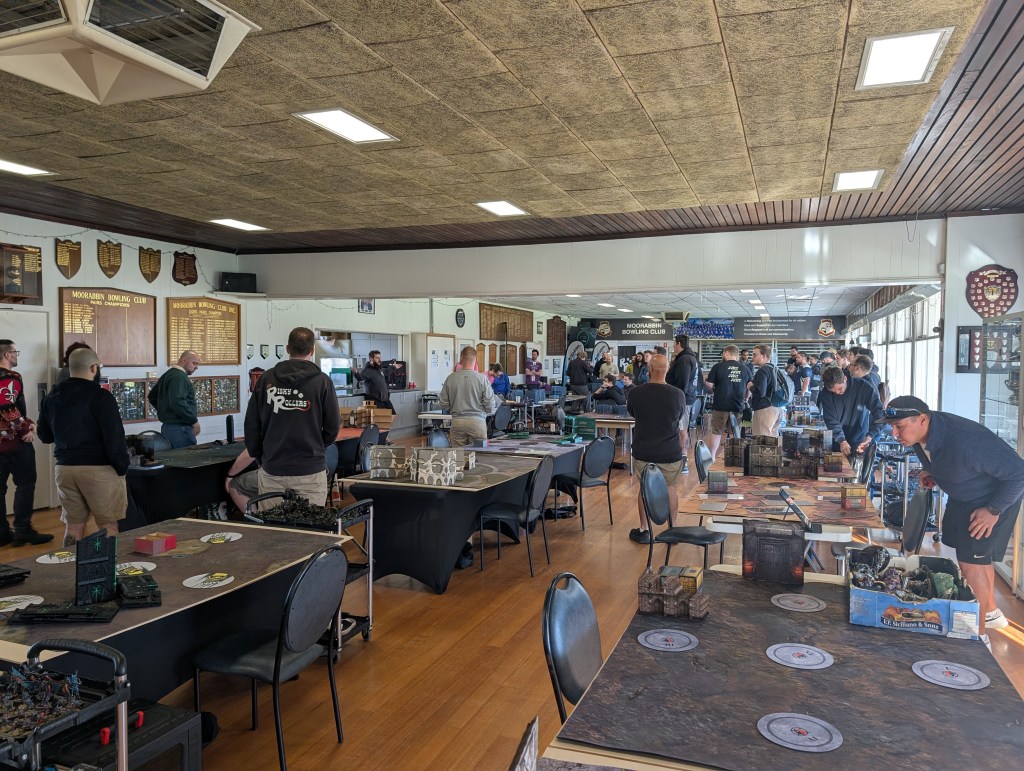
This is a list I plan on running at an RTT this weekend, I’ll report back with how I go, and if there are any changes I would like to make (note, I won’t be battle ready for this event, but it will help me decide where I want to focus my painting for a GT coming up in the first weekend of November). Note. I dropped the terminator unit for a Vindicator and Raptor squad, we’ll see how this goes, I may change it back.
- Chaos Lord
- Dark Commune: Willbreaker
- Cultist Mob
- 5x Legionaries
- Chaos Rhino
- Full strength Accursed Cultists
- 3x Chaos Bikers – 2 Melta
- Predator Destructor
- Chaos Vindicator
- 2×2 Obliterators
- 3×5 Raptors, 2 Melta, 1 Plasma
- 10x Warp Talons
- 6x Noise Marines
This list is fairly straight forward, put the Noise Marines and Legionaries with the Chaos Lord in a rhino, stage it forwards, start the Warp Talons, maybe one unit of Raptors and either both or one unit of Obliterators in Deepstrike, everything else goes on the board.
The idea of the ACDC unit is to create space by threatening an advance and charge, the Raptors hold steady near objectives and other units, making it difficult to charge one without charging both allowing them to use their start of fight phase battle-shock ability. Bikers move fast and do objectives while being a little bit tanky, the Predator is the only real long-range shooting, but the game happens so close together now that the Obliterators and Vindicator are the main shooting threat, sadly.
As far as DT lists go, I think this is alright. I guess we’ll find out this weekend. Until then, cya nerds.


 Litanies of the Faithful
Leave a comment