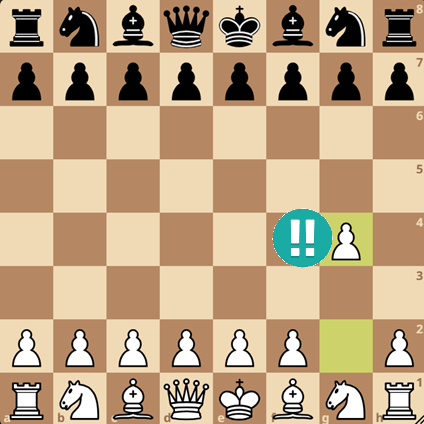
Today, we are going to be investigating more strategical ideas that can be applied to both Chess, and Warhammer. While these ideas may sometimes be specific to a chess board, such as ‘The good ‘bad bishop’, or opposite-coloured bishops, that doesn’t mean therein lies wisdom and ideas that we may apply to our games of toy soldiers.
Strategies in chess are never ending. There are different openings, approaches, variations, tactics, attacks, defences, the list goes on. There have been tens of thousands of books written about chess strategy, analysing games, discussing tactics, or simply lessons on strategy. I am going to be taking some of these chess strategies and seeing how they can be applied to Warhammer games to help guide thinking during the game.
These strategies may not apply to list building so much as decisions many players struggle with during the game itself. It can also help with your mentality and approach to loses, using them to learn and improve your game in the future. Let’s get started.
NB. While there are always caveats to strategy depending on the game state, moves your opponents are making, and what army you are playing, these general chess principles can help advise strategy and thought processes during a game of Warhammer.
The centre of Gravity
The importance of ‘the centre’ is stressed in every beginner’s chess manual, yet the centre of the board takes precedence early in the game only because we don’t yet know where our pieces will be needed. Control of the centre may be needed to maintain communications between the two wings, but as the game develops, local battlefields develop elsewhere on the board, each demanding the attention of various pieces, in attack or defence.
Applied to Warhammer, the centre of the board is a vital position. In the current mission pack, Pariah Nexus, and assumably in all future mission packs, it contains an objective, worth primary points and is the location where multiple secondary missions can be completed: secure no man’s land, extend battle lines, storm hostile objective, area denial, overwhelming force, establish locus, cleanse. That’s 7/18 secondaries that can be potentially scored in the middle of the board. This doesn’t necessarily mean you need to control the centre by sticking a fat brick of terminators on top of it. But you should consider having units within effective range of the centre of the board in-case opportunity presents itself.
In chess, when the central pawns become locked together, unable to capture, the centre itself may become of relatively minor importance. Similarly in Warhammer, when you have two units within threat range of the centre, but outside threat range of one another, this can create a ‘stalemate’ of sorts, which is only enacted upon when one of the aforementioned secondaries is drawn and action must be taken. Additionally, even when the centre is open, it may still have little effect on the real battle. The centre can be a useful place to change from one location of the board to another, i.e. staging near the centre and moving/advancing through to reach a charge target or to gain LOS for shooting, but it can become a dull location for your units to spend time, it may also become a place where they do not want to leave.
When the important action is concentrated in various different locations – perhaps around two kings as the players attack on opposite wings (in Warhammer terms this would be the other no man’s land objectives), or at the various positional weaknesses that both players are trying to exploit (this is why you need to screen your deployment zone!), communication becomes all-important. When the time is not yet ripe to launch a final attack, everything is in a state of dynamic equilibrium, with the weights of various different centres of action all combining to give the position an everchanging centre of gravity.
A body will topple if its centre of gravity is supported only by thin air.
When your units are unable to communicate effectively with one another across the board due to deficiencies in the centre, your position in a game can disintegrate into hopelessness. Ensuring you have adequate weight towards the centre of the board maintains equilibrium in your position and communication between your units.
Timing
Even when your general strategy is correct and you make no mistakes in calculation, it is still depressingly easy to lose. For having a good strategy and implementing that strategy correctly are two very different things. At the highest level of chess, and similarly the highest level of Warhammer, it often comes down to a question of timing. When should you switch from a cautious circumspection to an all-out attack? When is it safe to move from passive defence to fighting for the initiative? In Warhammer this decision is often made for you by the secondaries you draw, but it doesn’t necessarily mean you have to take action yet.
There are two easy ways to spoil a good position: doing nothing when you should be doing something, and doing something when you should be doing nothing.
The first question you should be constantly asking yourself is: ‘How can I improve my position?’ The next question is: ‘How can my opponent improve his position?’ – I’d like to add onto this by applying a train of thought I often use in my games of Warhammer, ‘If I were to do nothing with my turn, what would my opponent store on their next turn? what could they potentially score?’ By applying this line of thought you can effectively work backwards to solve problems and arrive at the right ideas and actions necessary to make good moves. – When you have the advantage – in time, space, material, or general mobility – and all your men are effectively placed, then is the moment to launch an attack, before your opponent catches up. A correct attack stems from surplus capacity: kinds need defending (defending objectives); important central squares need to be kept under guard (threatening charges); the opponent’s expansionists dreams need to be held back (threatening objectives & controlling space); but if there are any pieces left over when those tasks are done, they must attack the enemy (or be positioned to effectively score secondaries).
When the balance of power is delicately poised, however, and both sides are still disputing vital areas of the board, any attempt to launch an attack is liable to result in a loss of control once any temporary initiative has been dissipated (the exception being alpha strike lists i.e. Wolf Jail). In tense positions, ‘doing nothing’ (but doing it very well) is often the best policy.
This is one of the great tragedies of Warhammer, as you get better at the game, you will soon realize that ‘doing nothing’ is the best play in a lot of circumstances. That is not doing nothing in the sense of not moving, controlling space, or threatening action, is it doing nothing in not using your cool models to do cool stuff. However, when you start doing nothing effectively, you will realise how strong is can be.
Patience
Everyone can recognise the need for patience in defence: when your opponent is pushing you around and making direct threats, there is nothing to do but knuckle down to the task of patient resistance. Yet patience can also be a considerable virtue in playing an attack. If you have a firm advantage and a natural attacking plan, your opponent wants you to get on with it. He knows what you are doing to do, and he has prepared his defences. He cannot be sure whether they will hold or not and not knowing adds to his misery. The longer you keep him waiting, the more you will wear down his resistance.
When your opponent is tied up, don’t loosen the knots.
If the decisive battle is bound to be fought on the k-side (or in the case of supply drop for example, the objective that sticks around in the 5th battle round), probe a little on the other flank first. Especially when you have an endgame advantage (bottom of turn), it may pay to explore some second-rate winning plans before committing yourself to the natural and correct one. Your opponent will be psychologically prepared to meet your best plan, so why not keep him waiting? You may even find sometimes that he kills himself in frustration, trying to break out in an unjustified manner, thus saving you the trouble of winning the game altogether.
Applied to Warhammer, you may be staged to hold the last objective in supply drop on round 5, netting 15VPs. Your opponent knows this, and you know this, so why not try attacking the other objectives in the meantime while your opponent is focused on solving the problem of your initial advantage. This doesn’t necessarily mean you should be implementing tactics to swindle your opponent in the hopes they make the wrong decision. But when you do have an advantageous position over your opponent there is no need to press the issue, you can simply, wait and explore other ideas.
I hope you took something away from this post and can understand how general chess principles and strategies can be applied to situations in Warhammer games. I’ll definitely be writing more posts similar to this one with more chess ideas and strategies, I may even try to include examples from my own games. If you have anything you would like me to write about comment below!
Cya nerds.
If you are interested, the lessons and strategies discussed in this article are taken from the book:
Improve your chess by William Hartston

 Litanies of the Faithful
Leave a comment