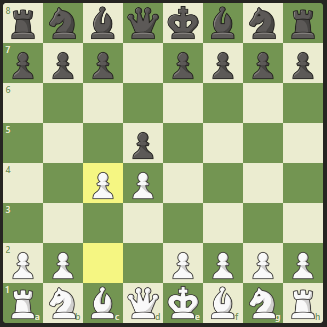
‘An act or remark that is calculated to gain an advantage, especially at the outset of a situation’ – Gambit.
The first time I heard the word gambit was when I was watching X-Men, he was a cool card throwing man. This turned out to be foresight for who I would become during Warhammer 10th edition, a cool card throwing man. Also, this is a really common term used in the chess world, but it is actually relevant there.
In chess, a gambit is an opening set of moves where a player sacrifices material with the aim of achieving a subsequent positional advantage, however, the differences between performing a gambit in chess vs. Warhammer, is that in chess Gambits are described as being “offered” to an opponent, and that offer is either “accepted” or “declined”. While in Warhammer, your opponent has no choice, they must face your gambit and suffer the consequences, which most of the time means victory for them.
Side note: If you DO play chess, you should check out the Grob opening. It is a gambit, an awful one that doesn’t really leave you with any compensation, but it’s my favourite opening and always leads to interesting chess games.
The 10th edition of Warhammer introduced the Leviathan mission pack, with a ‘random mission generation’ feature and a secondary card deck, built on Tempest of War matched mission pack from 9th edition. But a major difference between Leviathan and Tempest of War was the inclusion of the ‘Gambit Deck’.
The Gambit Deck
Hyped up during the initial preview of the Leviathan mission pack, gambits were set to either be absolutely game changing, warping the meta game around armies that could easily gambit for a guaranteed 30 points, changing the way lists are built, OR, to do absolutely nothing. I think you can see where I’m going with this.
There are two gambit decks in the Leviathan mission deck, each with identical cards. They contain ‘challenging‘ goals that players can attempt to achieve by the end of the battle instead of attempting to score anymore VP from the primary mission.
Normally you score primary from a card drawn randomly or assigned through the super cool and interactive Leviathan tournament companion document. However, at the end of the third battle round, before starting the next one, players can choose to gambit, receiving no more victory points from the primary mission for the remainder of the game.
The gambit deck consists of three cards, and the Proceed as Planned card. Each player takes the Gambit deck, removing the lame and unnecessary Proceed as Planned card (only losers use this card), before shuffling the remaining gambit cards and randomly discarding one. Each player then adds their Proceed as Planned card back in. Players then secretly choose one of these cards and play it face down on the battlefield. Once both players have done so, they reveal their choice.
If a player reveals a Proceed as Planned card, their virginity has been secured and they can continue drinking their choccie milk under their blankie on the lame side of the battlefield while you reveal the gambit you’re attempting. If you complete the goal described on the gambit card, you score like 30VPs, it’s pretty sick not going to lie.
But what are the actual gambits?
There are three gambits:
Delaying Tactics
Determine distraction target: This is equal to half the number of enemy units that are within Engagement range of one or more units from your army (rounding up) at the end of your 5th turn. If this number is less than 4, increase it to 4.
Distract enemy units: At the end of your fifth turn, roll one D6 for each enemy unit that is within Engagement range of one or more units from your army. Add 1 to the result if that enemy unit is Battle-shocked and subtract 1 if one or more units from your army within engagement range of it are Battle-shocked. On a 4+, that enemy unit has been successfully delayed.
Determine Gambit Success: If the number of enemy units that have been successfully delayed is GREATER than or equal to your distraction target, this gambit is successfully completed, and you score 30 VP!
Overall ranking: 3rd
This gambit is probably the most difficult of the three to achieve, needing to have at least 4 of the enemy’s units engaged by your own, ideally having 8, that aren’t dead after the ensuing combat, and your own units also not being dead. As well as achieving this, you need to roll 4+ at least FOUR times with these units.
Assuming that you have four enemy units engaged, your odds of achieving this gambit are about 6.25% or about 1/16 times attempted, not fab.
| Number of enemy units engaged | Odds (percentage) | approximate odds (fraction) |
| 4 | 6.25 | 1/16 |
| 5 | 18.75 | 1/5 |
| 6 | 34.38 | 1/3 |
| 7 | 50 | 1/2 |
| 8 | 64 | 2/3 |
As the number of enemy units you’re engaged with increases, the odds actually become pretty high at scoring 30 points, I mean for a gambit at least. But as a lot of armies barely have more than 10 or 11 units to begin with achieving this is seemingly impossible, I mean you also have to have 5+ units in your army left alive, and in charge range after movement turn 5, and not killing your opponent’s units in melee, and not dying either, Rouge.
Emergency Evacuation
Determine Evacuation Target: Your target is equal to half the number of units from your army that are on the battlefield at the end of the battle (rounding up), including units embarked within Transport models, if this is less than 4, it is increased to 4.
Evacuate Units: At the end of your fifth turn, roll a D6 for each unit from your army that is wholly within 6″ of the centre of the battlefield. subtracting 1 if the unit is Battle-shocked. On a 4+, that unit (and any units embarked within it) are marked for evacuation.
Determine Gambit Success: If the number of your units that are marked for evacuation is greater or equal to your target, the gambit is successfully completed and you score 30 VP!
Overall ranking: 2nd
I have a bone to pick with this gambit, it states that the target includes units embarked within transports, and when evacuating units on a 4+, that unit (and any units embarked within it) are marked for evacuation. Does that mean if I have 3 units embarked within a Rhino, and I evacuate the rhino, does it count for 4 units evacuated?
After a brief skim through the rules combined with wishful thinking, I believe yes, it does count as 4 units. Two transports with 3 units in each? Now you have a 75% chance of successfully completing this gambit, very funny and cool.
Being wholly within 6″ of the centre of the battlefield may be difficult to achieve though, but that sounds like a problem for a later time. Otherwise, see table from delaying tactics for odds of completing this gambit given the number of units you have wholly within 6″ of the centre.
Orbital strike coordinates (The coolest gambit)
At the end of your fifth turn, if one or more units from your army that are not Battle-shocked are wholly within 9″ of a corner of the battlefield, and those units are not within your own deployment zone, roll 2D6.
Add 1 to the result for every other corner of the battlefield that has one or more units from your army wholly within 9″ of it (excluding Battle-shocked, or units within engagement range of enemy units).
If the final result is 12 or more, this gambit is successfully completed, and you score 30 VP!
Overall ranking: 1
Orbital strike coordinates is the simplest gambit to understand and complete. It is achievable without the need for units to be in certain positions or in engagement range of enemy units. In fact, it’s achievable without doing anything, but that’s not why it’s ranked no. 1
It’s ranked no. 1 because you put yourself in a position where if you can roll boxcars on two D6, you get 30 primary points, no ifs, ands, or buts.
That being said, rolling 6’s on 2D6 gives you about a 1/36 chance of success, not great, and a lot lower than the other gambits worse chance of success at 1/16. But even getting into a position where you can successfully attempt the gambits is incredibly difficult. So is it better to have a guaranteed chance as a 1/36, or an almost impossible chance at a 1/16.
You can improve the success of this gambit by having a unit from your army wholly within 9″ of a battlefield edge, provided it’s not in your deployment zone, which makes dawn of war and hammer and anvil the worst deployments to attempt this on because you can only get two units into these positions. On the other deployments you can get a max of 3, as one corner will always be your deployment zone. For each unit you have in a corner that isn’t battle shocked or within engagement range of an enemy unit, you can add +1 to the roll.
| Number of units within 9″ of table corner | odds (percentage) | approximate odds (fraction) |
| 0 | 2.7 | 1/36 |
| 1 | 5.56 | 1/18 |
| 2 | 8.33 | 1/12 |
| 3 | 27.78 | 1/9 |
As you can see, unfortunately the odds do not get much better, but this is still probably your best bet at completing a gambit. Plus, when you pick this, your opponent gets to be really annoyed for 2 battle rounds hoping you don’t roll a 12, which in itself is hilarious.
Why the sudden interest in gambits you ask? I mean they’ve been around for the whole of 10th edition so far and I haven’t attempted one once!
Well, secret missions will be replacing gambits in the next mission pack, so we’ll have to see if they’re equally as useless as gambits or have some play, but I think I might give them more of a go this time, they seem easier to achieve and might lead to more interesting games.
But as far as gambits go, I have a GT coming up in a couple of weeks, Terracon, where I plan on attempting a gambit every game. You’ll have to wait for the next tournament report article after Terracon to see how I went.




 Litanies of the Faithful
Leave a comment